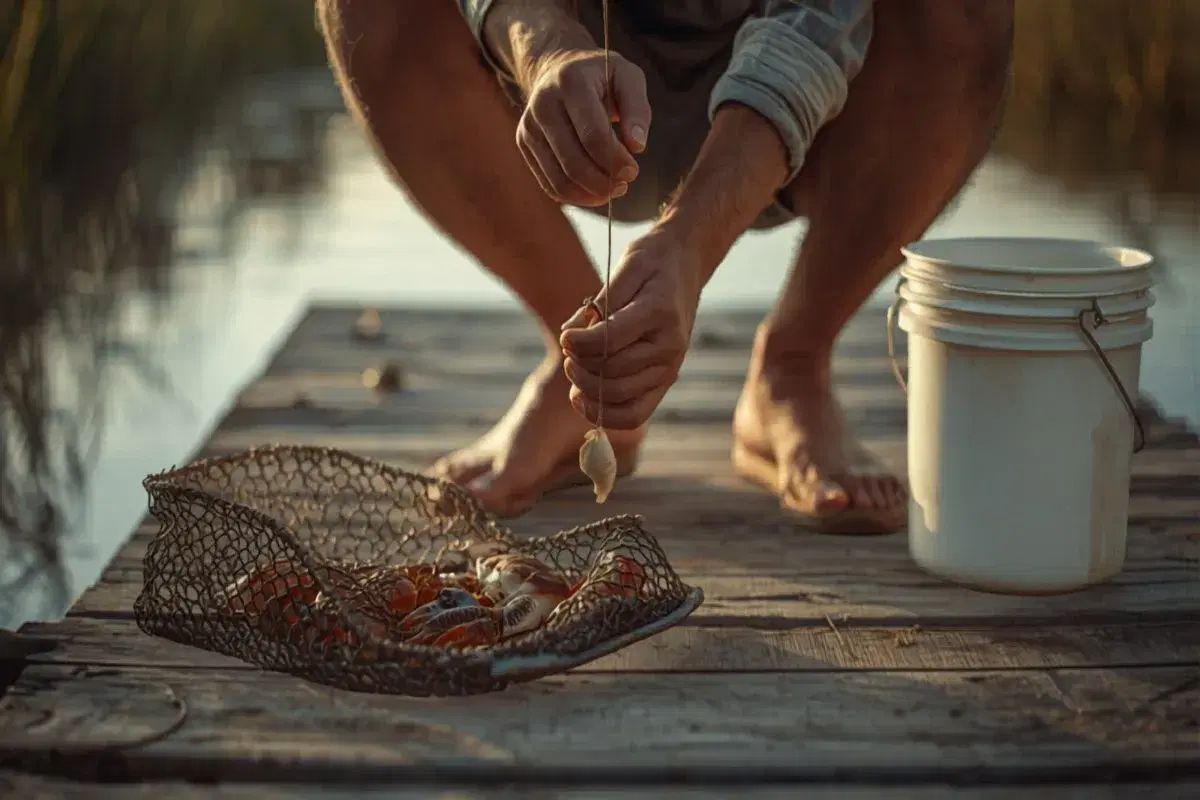
Crabbing is the rare Outer Banks activity that costs almost nothing, needs no license for recreational catch, works for a six-year-old or a sixty-year-old, and ends with a genuinely great dinner. On Currituck Sound — the shallow, brackish water that separates the mainland from the barrier islands — blue crabs are abundant from late spring through fall, and the easiest way to catch them is the oldest way: a hand line baited with a chicken neck, dropped off the end of a dock.
If you're staying somewhere with sound access, you can crab in the morning before the beach and again at dusk. Here's everything a first-timer needs to know.
Why Currituck Sound Is Good Crabbing Water
Currituck Sound is shallow — much of it is under six feet deep — with a soft, muddy bottom and extensive marsh grass along the edges. That's exactly the habitat blue crabs prefer. The water is brackish rather than fully salt, which suits the species well, and the lack of strong tidal current (Currituck Sound has very little astronomical tide compared to the ocean side) means your bait stays put and crabs can find it.
The practical upshot for a visitor: you don't need a boat. The water right off a sound-side dock holds crabs all season. A private dock on the sound is one of the most underrated amenities a vacation rental can have, precisely because it turns crabbing into something you do casually, between other plans, rather than a planned expedition.
When to Go
Season: Blue crab activity on Currituck Sound picks up as the water warms in May, stays strong through the summer, and runs into October. The warmer the water, the more active the crabs. High summer — July and August — is peak.
Time of day: Early morning and the few hours before sunset are best. Crabs move into shallower water to feed when the light is low and the heat is off. Midday in full sun is the slowest stretch, though you'll still catch.
Conditions: Calm, overcast days are excellent. A light wind is fine. What you don't want is water churned muddy after a storm — give it a day to settle.
What You Need
The beauty of drop-line crabbing is the gear list is almost a joke:
- Hand lines — just heavy string or cord, about 10–15 feet, one per person. Many sound-side rentals keep a few on hand; otherwise any hardware store or OBX tackle shop sells them for a couple of dollars.
- Bait — raw chicken necks are the classic choice. Chicken legs or backs work too. Some people swear by fish heads. Chicken is cheap, tough enough to survive several crabs, and easy to tie on.
- A long-handled dip net — this is the one piece you can't improvise. You need the reach and the wide hoop to scoop a crab as it nears the surface.
- A bucket or cooler — five-gallon bucket for a casual session, a cooler with a little ice if you're keeping a real haul.
- Optional but smart: gloves for handling crabs, a tape measure or crab gauge, and a pair of tongs.
That's it. No rods, no reels, no bait shop pump.
How to Drop-Line Crab, Step by Step
1. Tie on the bait. Secure a chicken neck firmly to the end of your line. Tie it well — the whole technique depends on the crab not being able to simply swim off with it.
2. Lower it to the bottom. Drop the baited line off the dock until you feel it hit the muddy bottom, then take up just the slack. The bait should rest on or just above the bottom.
3. Wait, and watch the line. Within a few minutes you'll often feel a series of small tugs — that's a crab tearing at the chicken. Sometimes you'll see the line angle change as the crab tries to drag the bait.
4. Raise it slowly. This is the whole game. When you feel weight, begin pulling the line up slowly and smoothly — no jerks, no speeding up. A blue crab will hang onto a chicken neck and ride it all the way to the surface as long as you don't spook it. The instant the line stops moving smoothly, the crab lets go.
5. Net from underneath. Have a partner ready with the dip net. As the crab comes within a foot or two of the surface, slide the net into the water below the crab and scoop upward. Never swipe at it from above — the crab will drop off and dart away.
6. Into the bucket. Shake the crab out of the net into your bucket, re-check your bait, and drop the line again.
Working with a partner — one on the line, one on the net — roughly doubles your success rate and is half the fun. It's a genuinely good activity for families traveling with kids.
Reading a Legal Crab
North Carolina regulates blue crab harvest, and the rules are simple but they matter:
- Size: A keeper hard crab must measure at least 5 inches point to point — across the widest part of the shell, from the tip of one lateral spine to the other. Anything smaller goes back.
- Females with eggs: A "sponge crab" — a female carrying a visible orange or brown spongy egg mass under her apron — must be released, every time. This is how the population sustains itself.
- Telling males from females: Flip the crab over. The "apron" on the belly is narrow and shaped like the Washington Monument on a male, and broad and rounded (like the Capitol dome) on a mature female.
- Recreational limits: North Carolina allows a generous recreational daily limit, and recreational hand-line crabbing does not require a license — but rules change, so check the current North Carolina Division of Marine Fisheries regulations before you go.
When in doubt, throw it back. There's always another crab.
Handling Crabs Without Getting Pinched
Blue crabs are fast and they will pinch hard. A few habits keep it painless:
- Pick a crab up from the rear, with thumb and finger on the back of the shell, well behind the swimming legs. The claws can't reach you there.
- Use tongs if you'd rather not touch them at all — especially good with kids.
- Keep your bucket lid handy. Crabs climb, and a determined one will be over the rim and across the dock in a hurry.
- A little shade and a splash of sound water keeps your catch alive and fresh until you're ready to cook.
Cooking Your Catch
Fresh-caught Currituck blue crab needs almost nothing done to it. The simplest preparation: steam them.
Bring a couple of inches of water (many add equal parts water and vinegar) to a hard boil in a large pot with a steaming rack, season generously with Old Bay or a local crab boil seasoning, add the live crabs, cover, and steam for about 20–25 minutes until the shells turn bright orange-red. Steam — don't fully submerge and boil — to keep the meat from getting waterlogged.
Dump them out on a newspaper-covered table, hand out mallets and picks, and go. It's messy, slow, communal eating — which is the point.
If you'd rather someone else do the picking, the OBX has no shortage of options — our guide to the best seafood restaurants on the Outer Banks covers where to find crab cakes and steamed crabs done right.
Make a Morning of It on the Sound
Crabbing pairs naturally with the other quiet-water activities Currituck Sound is known for. Drop a line, and while you wait, you've got a front-row seat to some of the best kayaking on Currituck Sound and, in the cooler months, the legendary duck hunting the sound is famous for. It's also productive fishing water — many a dock session turns into catching crabs, casting for a few fish, and watching the sun go down all in the same evening.
This is the version of the Outer Banks that doesn't show up on the postcards: shallow brackish water, marsh grass, a working dock, and dinner you caught yourself. It's also why a sound-side base in Grandy appeals to a particular kind of traveler — one who wants the beach 15 minutes away but wants the water right there.
Grandy Cove sits directly on Currituck Sound with a private dock and boat launch — crabbing gear-down to the water in about thirty seconds. Bring a bucket and a bag of chicken necks.
Check availability and book your stay direct — your crabbing dock is waiting.